Beyond the March: Rethinking Peaceful Protest for a Divided Age

The streets fill with chants. The air hums with conviction. Signs wave, slogans rise, and cameras capture the spectacle. For a moment, it feels like something powerful is happening. But by the next morning, the streets are empty again. News cycles move on. Nothing has changed.
Once, a march could shake the conscience of a nation. Today, it too often feels like a ritual – predictable, performative, and quickly forgotten. Martin Luther King Jr. once remarked that a march in the South was revolutionary, but a march in the North was symbolic. In the South, protest collided with power. It forced confrontation. In the North, it was mostly a statement: visible, yes, but rarely transformative.
Half a century later, we are still marching, but the world has changed. Crowds are larger, yet hearts seem harder. The language is louder, but the listening is thinner. We have more movements than ever before, and somehow, less movement.
If peaceful protest is to remain a force for change, it must evolve. The next generation of nonviolent action cannot be measured by the size of the crowd or the sharpness of the slogan. It must be measured by depth, presence, and meaningful change.
The Legacy We Inherited

The great movements of the past remind us that protest was once sacred work. Gandhi’s Salt March in 1930 was a 240-mile act of defiance against empire, an expression of both resistance and inner discipline. The Montgomery Bus Boycott lasted over a year, costing participants jobs and safety but awakening a national conscience. Selma’s marchers faced tear gas and clubs on the Edmund Pettus Bridge, and their courage exposed the brutality to the world.
These were not comfortable acts of expression. They were commitments that demanded risk; freedom, livelihood, and sometimes life itself. Nonviolent protest was never about volume. It was about moral pressure, creating a contrast so clear that neutrality became impossible.
Today, by contrast, many of our protests require little sacrifice. We can signal solidarity from our screens or join a march for an afternoon and return to our routines by dinner. The emotional catharsis of “doing something” has replaced the slow, disciplined work of transformation. We have confused expression with change.
The Performance Trap
Modern activism has drifted into performance. Social media rewards visibility, not impact. Every cause becomes a hashtag, every gathering a photo opportunity, every crowd a competition for who “cares” more. Movements that once risked everything for truth now risk little more than their weekend schedule.
The result? Protests no longer disrupt; they decorate. Politicians glance at aerial photos of crowds and declare moral victory - “look how many people agree with us!” - while their opponents do the same next week. The public sees dueling spectacles, each “proving” the righteousness of their side. And so, paradoxically, our protests reinforce the very divisions they were meant to bridge.
It’s not that people don’t care. They do! But our current model of protest feeds the ego more than the conscience. It gives us a sense of belonging and moral superiority, but it rarely changes minds or policies. The camera pans, the crowd cheers, and then...nothing.
Everyone is shouting, no one is listening?
Why the Old Model No Longer Works
The world that birthed the civil rights movement no longer exists. Media has fragmented into partisan echo chambers. Policymakers have learned to absorb outrage like background noise. The act of gathering itself, once shocking, has become expected.
Meanwhile, the internet gives the illusion of engagement without cost. A “share” feels like a stand; a comment thread feels like #resistance, but it's not. Moral change doesn’t happen in comment sections, it happens in relationships, in hearts, in systems slowly rewired by courage and compassion.
Protest once forced power to respond. Now, too often, it becomes just another data point in a polarized narrative. One side sees it as proof of righteousness; the other as proof of threat.
The problem isn’t the march, it’s what the march has become. When protest no longer disrupts comfort, it loses its power.
Maybe it’s time to return to what nonviolence really meant: not just the absence of violence, but the presence of peace.
Seven Shifts for a New Kind of Protest

Lyndon Johnson signing the Civil Rights Act in July 2, 1964
If the first generation of nonviolence confronted segregation and empire, the next must confront a more subtle enemy: division itself. The violence of our age is not always physical, it’s relational, psychological, and spiritual. It lives in contempt, certainty, and dehumanization.
To meet this moment, peaceful protest must transform. Here are seven shifts that could redefine what moral resistance looks like in a divided age.
From Mass to Meaning
For too long, we’ve measured moral weight by crowd size. But conscience is not a numbers game. A few hundred people standing in silent unity can move the soul of a city more than a million shouting in anger.
Imagine a thousand people kneeling in silence outside a courthouse, or a handful sitting in meditation at a detention center. These acts don’t seek attention; they invite reflection.
Principle: Less spectacle, more significance.
Goal: Awaken conscience, not dominate headlines.
From Outrage to Witness
The most powerful protests do not scream, they reveal. They hold a mirror to society and force us to see what we’d rather ignore.
True witness means going where suffering hides: prisons, rural towns, mental health facilities, refugee shelters. It means showing up not to condemn, but to accompany, to stand alongside those whom society forgets.
Principle: Go where silence protects harm. Goal: Expose truth through presence, not provocation.
From Centralized to Localized Action
National marches can ignite awareness, but they often fade as soon as the buses leave. Real change happens in the soil beneath our feet.
Imagine a Day of Listening: thousands of communities hosting dialogues across divides, each gathering rooted in local issues but connected by a shared commitment to empathy.
Principle: Decentralize the movement, centralize the message. Goal: Weave a network of conscience rather than a moment of noise.
From Nonviolence to Inner Peace
“Peaceful protest” often just means “nonviolent.” But peace is more than the absence of violence; it’s the absence of hatred.
Protest can be a spiritual discipline. Imagine demonstrators trained in mindfulness - breathing through anger, staying grounded when taunted, radiating calm instead of contempt. That kind of composure disarms far more effectively than shouting ever could.
Principle: Be the peace you demand. Goal: Embody what you ask the world to become.
From Protest to Service
What if every demonstration ended with action that healed something real? A march for housing that culminates in building homes. A climate protest that finishes with tree planting. A rally for justice that turns into a community cleanup.
When protest becomes service, it stops being theater. It becomes a living argument, “We don’t just want change; we are changing.”
Principle: Don’t just oppose what’s wrong, build what’s right. Goal: Replace moral theater with moral construction.
From Declaration to Dialogue
In a divided society, yelling louder doesn’t work. The new revolution may look more like a conversation circle than a march.
Imagine protest as a civic practice of dialogue - structured gatherings between people who disagree but share a common value like safety, fairness, dignity, or belonging. These aren’t debates; they’re acts of democracy.
Principle: Speak not to win, but to understand.
Goal: Transform protest into the practice of listening.
From Moment to Movement
Too many modern protests burn bright and vanish fast. Sustainable change requires community, reflection, and continuity.
After the march comes the meeting. After the chant comes the conversation. After the day of action comes the day of service, and then another, and another.
Movements endure when they build moral infrastructure like study groups, service teams, or dialogue circles. The future of protest isn’t a single march; it’s a thousand small gatherings that never stop.
Principle: Keep the flame, not the flash. Goal: Build a movement that breathes.
The Spiritual Core of Nonviolence
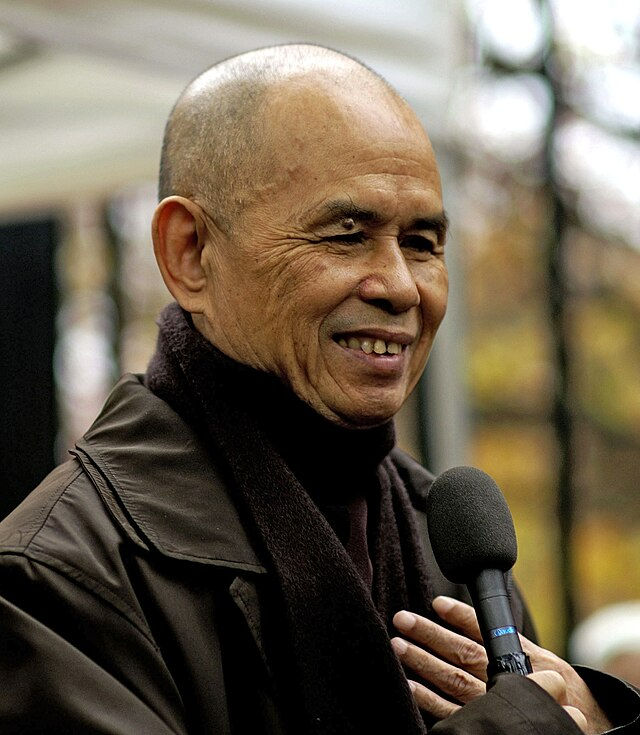
The philosophers of peace – Gandhi, King, Thich Nhat Hanh – understood that the real battle is not against our enemies, but against the hatred within us.
Gandhi called it satyagraha; soul force. King described it as “meeting physical force with soul force.” Thich Nhat Hanh taught that peace is not something you fight for, but something you practice.
Today, our soul force must take a new form. It’s not about confronting hoses or clubs. It’s about confronting contempt, misinformation, and apathy. It’s about reclaiming empathy in a culture that rewards outrage.
If we think of protest as the external expression of internal states, then the work begins in the nervous system. Mindfulness - awareness without judgment - may be the new frontier of nonviolence.
To protest peacefully in today’s world is to refuse to let the noise of division dictate the state of our hearts. It’s to walk into the public square radiating calm in a time of chaos. That’s not weakness, that's radical courage.
The Challenge Ahead
This new kind of protest is harder. It demands patience instead of adrenaline, humility instead of victory. It may not trend on social media or guarantee quick results. But it might, at last, touch what matters most...the human heart.
We need a civic renaissance rooted in moral imagination. A movement of people willing to stand - not for sides, but for values. We need people who understand that true peace is not passive; it’s active, courageous, and inconvenient.
Start small. Host a dialogue at your library. Spend an afternoon in silent witness outside a courthouse. Volunteer in a community that feels forgotten. Turn a march into a meal for those who need one.
The future of peaceful protest may not look like crowds in the streets. It may look like circles of listening, acts of service, and communities that refuse to mirror the hatred they oppose.
When we stop marching for power and start standing for peace, the world will stop and listen.
Because peace is not the absence of conflict, it’s the presence of conscience. And conscience, once awakened, cannot be ignored.
Reflection Questions
When have I mistaken expression for transformation?
What would it look like for me to protest with peace rather than anger?
How can I bear witness, not just make noise?
Where can I serve as part of my stand?


Comments