When Disagreement Feels Like Threat:

Updated: Apr 16
A Shift in the Temperature of Disagreement
"The aftermath of nonviolence is the creation of the beloved community, while the aftermath of violence is tragic bitterness. We must see that every end we seek must be joined with a means that is as pure as the end itself." — Martin Luther King Jr.
A quiet but significant shift has taken place in American social life. A trend that began in the 1980s and dramatically accelerated after 2000 is that Americans started prioritizing political alignment over religious alignment in marriage. While religious intermarriage was once considered a primary boundary in American romantic relationships, it has become increasingly common, whereas "marrying across the aisle" (political lines) has significantly declined. Political disagreements that once strained relationships today often end them. Friends have stopped speaking. Gatherings have predefined audiences. Family gatherings become tense or disappear altogether. Adult children cut off contact with parents. Siblings avoid one another. Increasingly, people describe political differences not simply as frustrating or disappointing, but as intolerable.
Explanations for this change usually focus on ideology, misinformation, or moral decline. We're told that one side has become more extreme, media ecosystems have fractured reality, "their" leaders are corrupt, or civic norms have eroded. Each of these explanations contains some truth. Yet, they do not explain why disagreement itself now feels so personal or why ordinary conversations so quickly escalate into moral rupture.
What if something deeper is happening?
What if the growing intensity of political conflict is not only about what we believe, but about how human cognition changes when disagreement is experienced as a threat?

How Threat Changes the Mind
Human beings did not evolve to evaluate political arguments in calm, classroom environments. For most of our history, disagreement within a group could signal danger: change, loss of status, exclusion, or vulnerability to outside threats. Our brains developed systems designed to detect risk quickly and respond decisively. These systems work remarkably well when facing physical danger. They're less helpful when navigating complex social and political questions.
When the brain perceives a threat, attention narrows. Ambiguity becomes uncomfortable. The mind searches for certainty. We become faster to judge motives and slower to consider alternative explanations. Nuance feels risky; clarity feels safe. It can even feel powerful. Psychologists often describe this shift as a move from slower, deliberative thinking toward faster, automatic judgment—a process that favors protection over curiosity.
Under these conditions, disagreement stops feeling like an exchange of ideas and begins to feel like a challenge to identity itself. The question changes from “Is this argument correct?” to “Is this person good?”
And once disagreement is experienced through the lens of threat, relationships begin to change accordingly.
"We are prone to overestimate how much we understand about the world and to underestimate the role of chance in events. When threatened, the mind defaults to 'System 1'—fast, emotional, and categorical—making slow, deliberative reasoning almost impossible." — Daniel Kahneman, Thinking, Fast and Slow
Cognitive Narrowing and Moral Certainty
When disagreement is filtered through threat perception, several predictable patterns emerge.
First, cognitive narrowing increases. Under perceived threat, the brain prioritizes speed over depth. We rely more heavily on mental shortcuts that simplify complex information. This is useful in emergencies. It is less useful when discussing tax policy, immigration, policing, or education reform. Subtle distinctions collapse into categories: good or bad, safe or dangerous, moral or immoral.
Second, attribution changes. Instead of interpreting a political position as the result of experience, trade-offs, or competing values, we're more likely to infer character and judge motives. Disagreement becomes evidence of deficiency (e.g., ignorance, selfishness, cruelty, naivety). Once motives are moralized, persuasion becomes secondary. Protection becomes primary. Sides are drawn and taken.
Third, identity hardens. Research on group dynamics shows that when people feel their group is under threat, in-group loyalty strengthens and out-group suspicion increases. Political affiliation in the United States has increasingly fused with other identities—cultural, religious, geographic, and educational. When those identities feel endangered, disagreement no longer registers as abstract policy conflict. It feels like a challenge to who we are.
In that psychological environment, estrangement begins to make more sense. Defenses are reinforced, axes ground, and torches readied.

The Amplifying Effect of Modern Media
This doesn't mean the stakes are imaginary. Political decisions do have real consequences. Laws shape lives. Policies affect communities. People are not wrong to care deeply. The question is not whether the issues matter. The question is how human cognition behaves when those issues are framed, or experienced, as existential threats.
Modern media has intensified this dynamic. The internet has made everything instant. Algorithms keep us scrolling, and marketing targets our identity and status.
We live in a media environment designed to capture and retain attention. Threat is efficient at doing both. Headlines emphasize urgency. Commentary rewards certainty. Social media platforms amplify emotional content because it spreads faster and keeps users engaged longer. Over time, this creates a steady stream of cues that signal danger, even when individuals are not directly affected.
Psychologists call this priming. When people are repeatedly exposed to threatening information, even indirectly, their baseline level of vigilance increases. In that heightened state, ambiguous stimuli are more likely to be interpreted negatively. A family member’s offhand remark about politics may be heard not as clumsy phrasing but as confirmation of something ominous.
The result is not simply louder disagreement; it is altered perception.
"When we see others as objects, we are 'in the box.' Our view of reality is distorted—we see others as threats, obstacles, or irrelevancies rather than as people with needs and desires as real as our own." — The Arbinger Institute, The Anatomy of Peace
From Conversation to Estrangement
Once perception shifts, conversations change tone. Voices tighten while interruptions increase. The body responds with elevated heart rate, muscle tension, and shallow breathing. This physiological arousal locks the "threat" filter in place. Under these physiological conditions, cognitive flexibility decreases further. People repeat familiar arguments rather than explore new ones. Listening becomes a strategic reaction rather than intentional understanding.
At some point, one or both parties conclude that the cost of engagement outweighs the benefit. Distance feels safer. Silence is stabilizing. Estrangement becomes a form of conflict management. Outward pressure maintains the status quo.
Seen through this lens, political estrangement is not primarily a sign that people have become more hateful or less moral. It may be evidence that more people are operating in sustained states of perceived threat, and of the way societies sustain unintended polarities.
Responsibility is not absolved, but our frame does shift.
Democracy and the Capacity for Disagreement
Democratic societies depend on sustained synthesis between agreement and disagreement. Pluralism assumes that citizens will hold competing beliefs about what is good while finding ways to inhabit a shared reality. Culture and societies, entire languages shift as humans live, grow, and evolve. Healthy political life requires not the absence of conflict but the capacity to engage it without dehumanization.
If threat perception has reshaped how we experience disagreement, then efforts to strengthen democratic culture may need to account for more than rhetoric and policy design. They may need to address the psychological conditions under which disagreement occurs. What is driving the conscious decisions may have more to do with the subconscious than with simple logic and ethics.
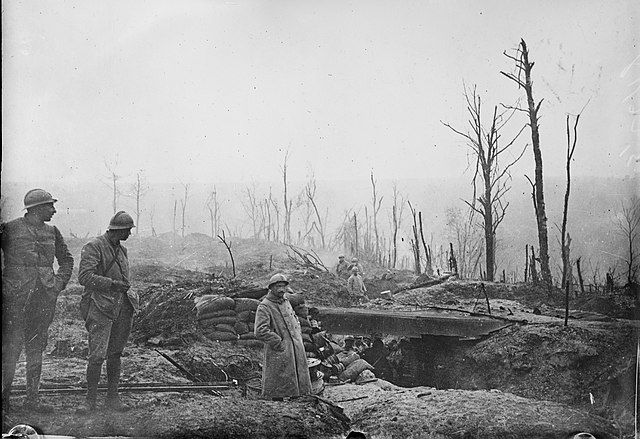
Lowering perceived threat means creating environments where the mind is capable of nuance without dehumanizing competing concerns. Wise advocacy is distinguishing between urgent problems and constant emergencies so that effort can be concentrated towards sustained change. It means recognizing that if every disagreement is framed as existential, the nervous system never returns to baseline, while trenches are dug deeper within the neurobiology of everyone involved.
The Role of Relationship
Perhaps one reason political conflict feels so different today is that many people rarely experience ideological disagreement in contexts that signal safety. Unstructured conversations don't happen anymore.
"Conversations" occur online, in comment sections, or across algorithmically sorted networks. Under those conditions, it is easier for the brain to default to defensive interpretation and personal attacks.
By contrast, disagreement that unfolds within healthy relationships—among people who share history, humor, and mutual interdependence—carries different cues. The presence of an ongoing connection can moderate the interpretation of threat. Familiarity complicates caricature. It's the "Beloved Community" of Martin Luther King Jr.'s vision.
And this is why political estrangement is so consequential: it violates the heart of advocacy and many of the values driving justice movements. When relationships dissolve over disagreement, one of the primary buffers against threat perception disappears. The loss is not only emotional, but it is also cognitive. Without relationships that span political differences, people receive fewer signals that those who disagree with them remain fully human.
"The degree to which a person can distinguish between the feeling process and the intellectual process is the degree to which they can remain functional in an anxious system." — Murray Bowen
A Different Question
None of this suggests that individuals should tolerate abuse, cruelty, or harassment in the name of unity. There are circumstances in which distance is appropriate and time necessary. This is not a call to endure what is harmful and turn a blind eye to injustice. Rather, it's an invitation to look more closely at what may be happening underneath:
What is happening inside us when disagreement feels like danger?
If that question feels like a threat, then the path forward may involve more than refining arguments or correcting information. It may involve attending to the psychological climate in which disagreement unfolds.
Are we consuming media in ways that keep us perpetually on edge?
Are we interpreting every policy difference as evidence of moral corruption?
Are we allowing ideological categories to eclipse the complexity of personal history?
These are not partisan questions. They are human ones. Every counselor, parent, professor, and minister grasps the importance of these today. We're just divided by them.
We may not be able to eliminate political conflict. Maybe we're not meant to. Disagreement reflects the diversity of humanity's changing experiences and perspectives. But we can examine the conditions under which conflict becomes intolerable, and set the baseline for how we perceive conflict in the first place.
When disagreement feels like a threat, our minds contract.
When perceived safety increases, they expand.
The viability of our causes may hinge on which state—contraction or expansion—becomes our baseline.


Comments